

October 15, 2026
On Wednesday and Thursday we spent time visiting the courts and a prison. It was a busy few days where we were encouraged, challenged and moved to tears on more than one occasion. Below are several reflections from the team!
Wednesday
We had the great privilege of meeting with Justice Mike Chibita, one of the founding members of UCLF. He generously shared with us about his career, his interests, and his faith. One of the most memorable reflections he shared with us was about a girl called Hope.
A watercolour painting of a young girl with a huge smile on her face hangs on the wall in Justice Mike Chibita’s chambers. Towards the end of our visit with him we had to ask who the girl was and why there was a painting of her.
Uganda is an overtly Christian society, but in our time here we have quickly learned that faith does not always run deep, that people are incredulous that you can be a Christian and a lawyer, and that witch doctors still have considerable power and influence. Justice Mike’s work in his previous role as Director of Public Prosecutions (DPP) included making a submission to the Ugandan Parliament on the criminalisation of witch doctors. His submission was that the criminalisation of witch doctors was inconsistent with the right to freedom of religion; this attracted opposition from some churches, but as DPP Justice Mike took a principled approach. Ultimately the Parliament made witch doctors subject to the same criminal laws that applied to the rest of the population – meaning that some of their conduct would be criminalised but not their existence per se.
Justice Mike has written about the Ugandan witch doctors in his upcoming book and as DPP he prosecuted multiple witch doctors – including the one who enslaved Hope.
Justice Mike told us how a witch doctor had kept a young girl captive and had routinely taken her blood and other bodily fluids for use in rituals. When the girl was no longer of any use to the witch doctor, he threw her in a sack, dumped the sack in a swamp, and left her for dead. A local woman saw the sack, noticed some movement and called the police.
The rescuers named the girl Hope, but by the time she was rescued she was almost completely paralysed. An overseas hospital carried out surgery on Hope at no cost and she has regained at least partial use of her limbs – but the psychological scars remain.
The painting depicts Hope as we know she will be one day – free and filled with life. Her painting is a powerful reminder of the dark reality of witch doctors and the occult – but also of the hope that we have as Christians in the law.
After our visit with Justice Mike, Josh, Mhairi & Penny were invited to join a conversation about court delays, case backlog & judicial appointments. The panel conversation was broadcast on X and YouTube, and allowed for the sharing of ideas and insights. The event was hosted by an UCLF member who has created a weekly platform to inspire and equip lawyers across all disciplines. They were impressed to hear of the support offered by the UK Judicial Appointment’s Service to prospective applicants, and were comforted to realise that case backlog is also an issue in the UK & Australia.
Thursday
The team split into two, with one group attending Kitalya Prison and the other attending the International Crimes Division which was sitting at Kampala High Court.
Penny, Josh & Mhairi had the unique opportunity to observe the start of the trial of Jamil Mukulu, the principal founder & former leader of the Allied Democratic Forces, a rebel group. Mr Mukulu stood alongside 24 other suspects, who between them spoke 5 different languages. They had been awaiting a trial since 2015 for offences of murder and acts of terrorism. The hearing commenced with the selection of three ‘assessors’ – non-legally qualified independent members of the community, who share their thoughts on the evidence with the four presiding Judges. Their contributions are not binding, but persuasive. We heard the evidence of one witness, only to find that he spoke a rare dialect of the Iteso language, which the court-appointed interpreter struggled to translate. As a result, the case was adjourned to find an interpreter who spoke that dialect. Owing to the specialist composition of the Judges & their wide judicial commitments, the case was adjourned for 6 weeks. It is envisaged that the trial will take 2 years to be heard.
After the hearing we met with an UCLF member who is the Victims Counsel in the trial. She has the unique role of ensuring that the victim impact is considered in the case. This is a statutory requirement (International Criminal Court Act 2010).
We found the experience incredibly insightful, as it allowed us to appreciate the obstacles and the complexities of the justice system in Uganda.
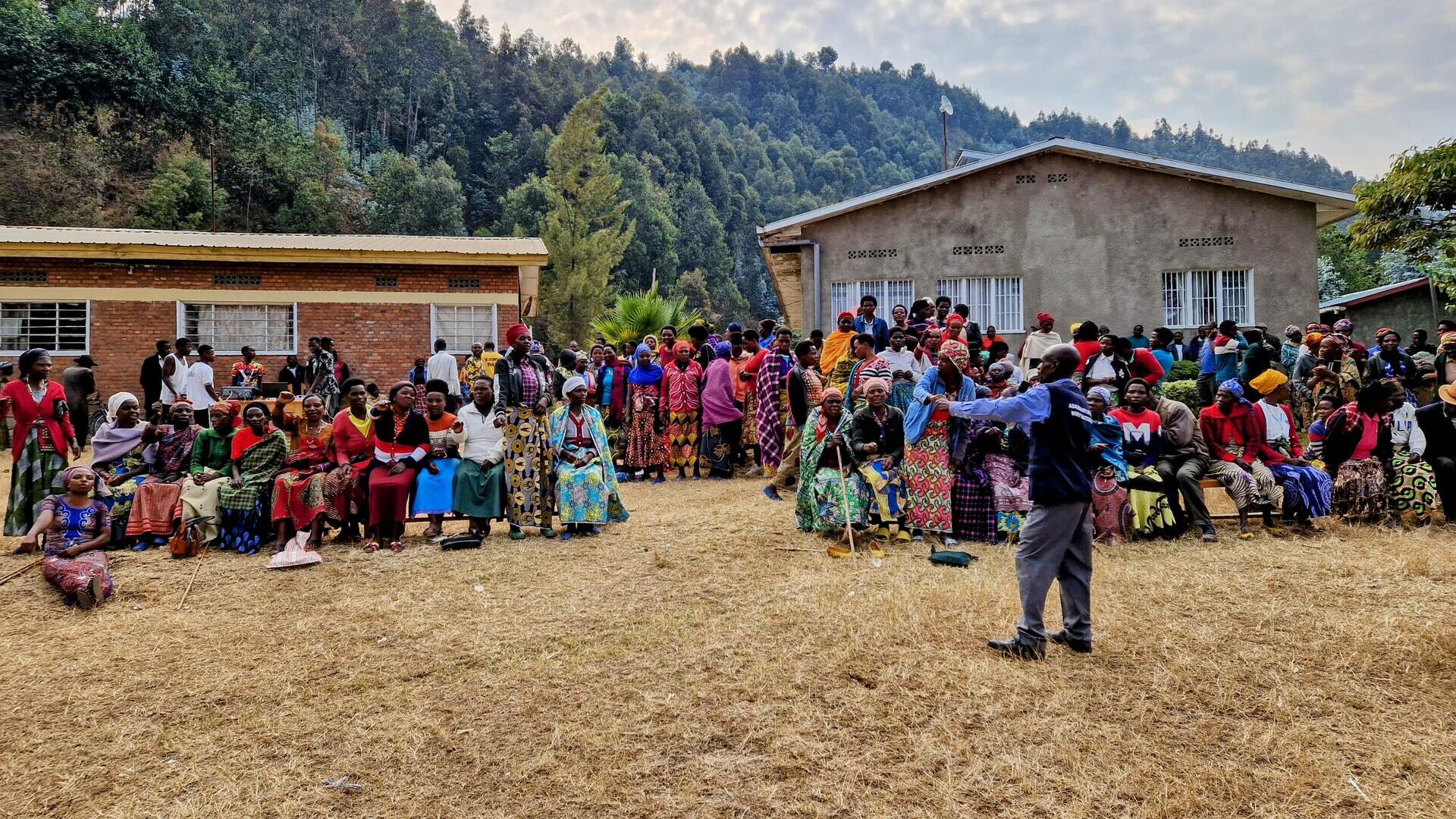
Evangeline, Veronica and Esther attended Kitalya Prison with Anania to take part in their regular prison fellowship. We were asked to share a short word of encouragement each and led them in singing the hymn ‘Amazing Grace’ together – and they knew the lyrics better than we did! We were blown away by how the prison fellowship operated so seamlessly as a church, with some of the inmates being given titles of Pastor and Elder. The choir was so full of energy, leading us with both their voices and breaking out into some incredible dance moves. One song particularly touched us, called ‘Yesu Asobola’ which means ‘God is able’. To see how passionately they sung this song and believed what they were singing really reminded us what trusting God looks like.
After the praise and worship, Anania gave an amazing presentation, explaining their legal rights and answering questions. His dedication to defending the rights of those unfairly or falsely accused continues to astound us, especially because of his own story. We were also impressed by the interpreter who was an inmate and translated the whole service, which was almost 3 and a half hours long, consistently switching between English and Luganda. We ended our visit by purchasing some beautiful bags made by the inmates, out of recycled packaging as part of a skilling program done in the prison.